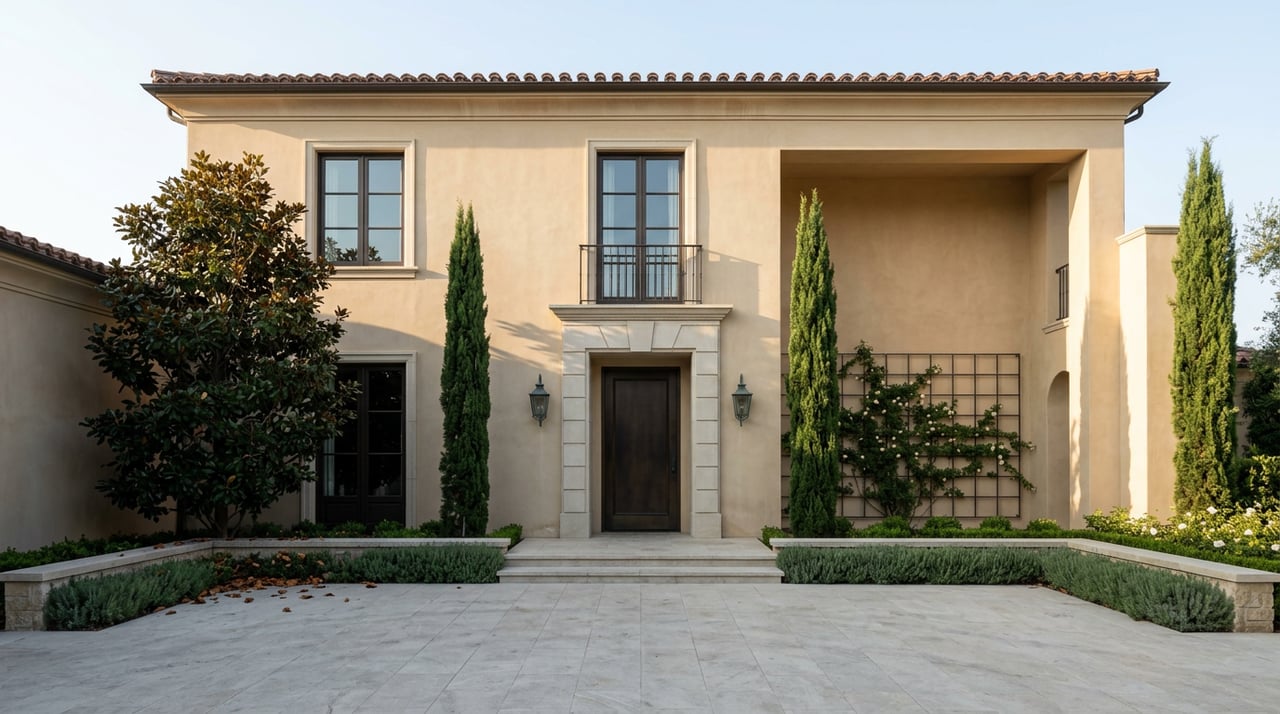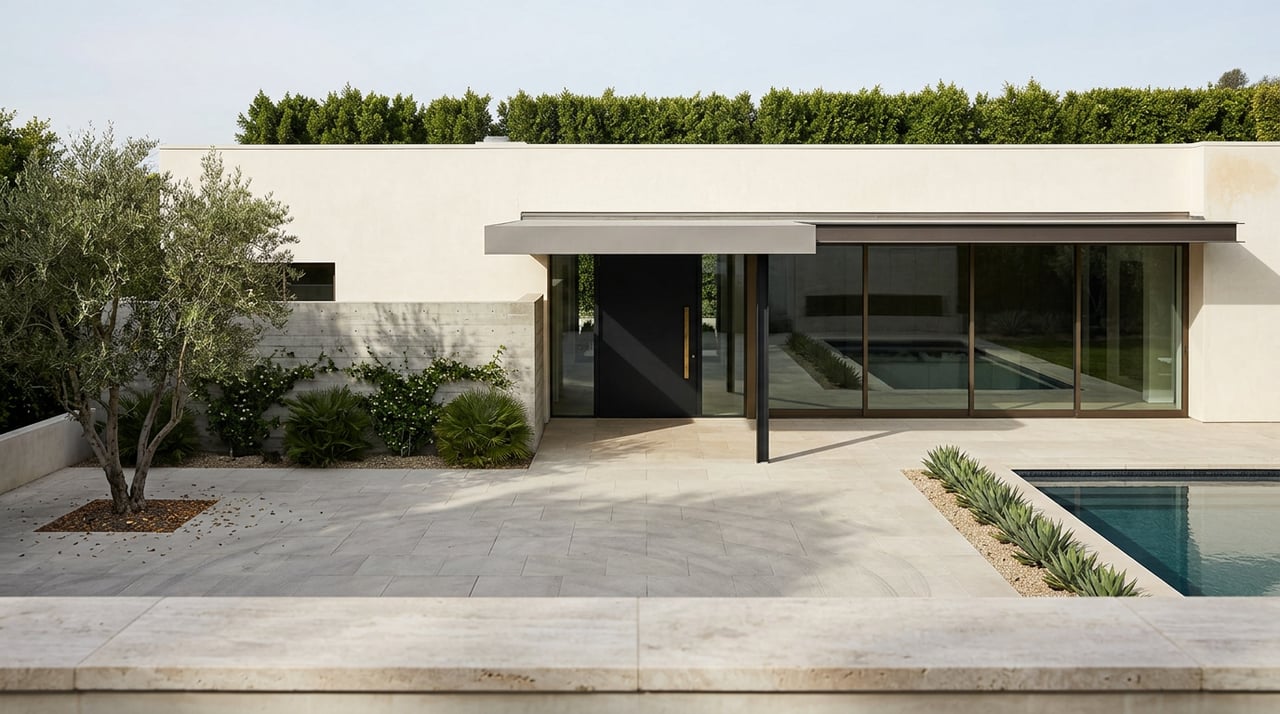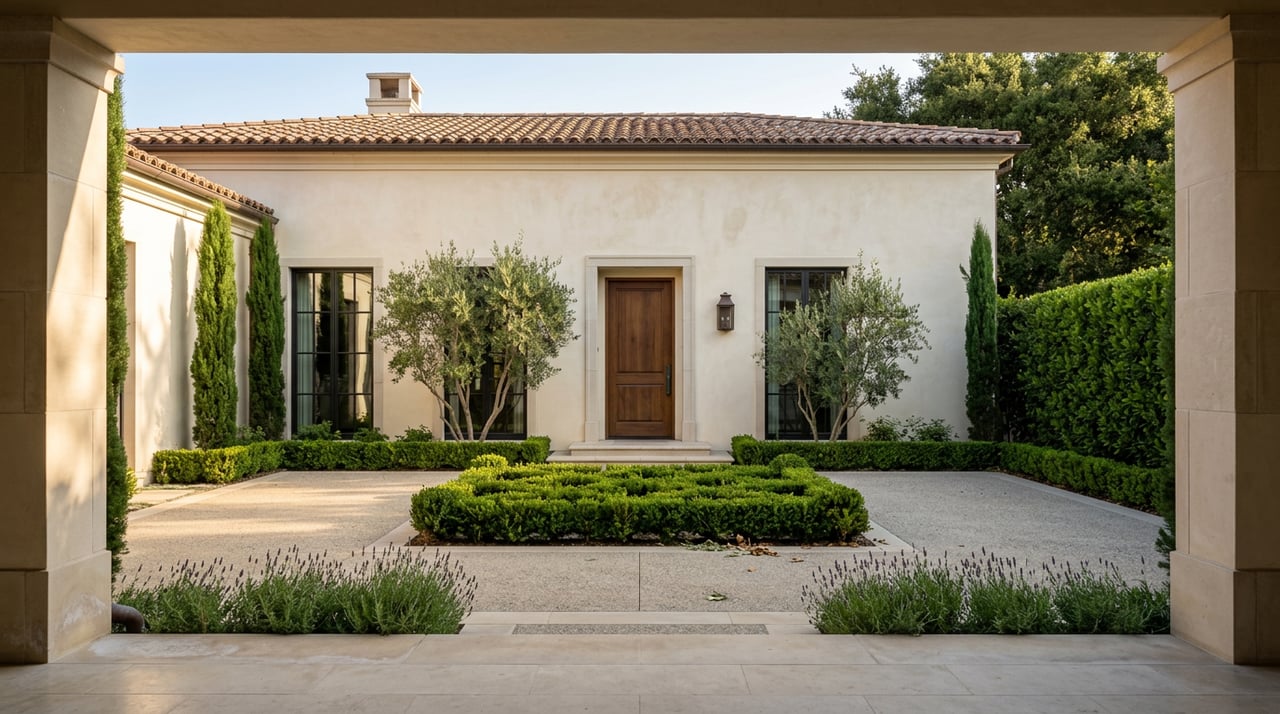
This month, the French Chateau that Paris Hilton and Carter Reum once called home went back on the market for lease, asking between $165,000 and $169,000 a month. Hilton had leased it in early 2023 for $160,000 a month after the Malibu fire took her beach house. She stayed until she bought Mark Wahlberg's estate a few doors down for $63.1 million in 2025 and moved out, leaving her old rental to cycle back into the pool of Beverly Park homes waiting for their next tenant.
Read the listing sheet and you'd call this a rental transaction. Read it as a pattern and it says something else entirely: in Beverly Park, a six-figure lease is rarely just a lease. It's the diligence period the sale contract can't provide.
The Number the Portals Don't Show You
Search Beverly Park on any listing site and the headline is the sale price, usually somewhere between $30 million and $50 million depending on which side of the community you're looking at. What that number hides is how much of the neighborhood's actual activity happens before anyone signs a deed.
The Hollywood Reporter's count from last fall put a figure on it: a year earlier, fewer than a dozen rental properties across the entire Los Angeles area carried six-figure monthly asks. By the time of that reporting, more than 250 homes across L.A. and Orange counties had crossed the $100,000-a-month threshold, with Beverly Park among the handful of neighborhoods where this had always concentrated. That shift didn't happen because more people suddenly wanted to rent mansions for the sake of renting them. It happened because leasing at this altitude had quietly become the industry's preferred way to test a match before committing to it.
Hilton's move fits the pattern exactly. She didn't buy first and figure out the neighborhood later. She rented, decided the community worked for her, and only then wrote a check for a specific house within walking distance of the one she'd been living in.
Two HOAs, One Gate, and a History That Still Shapes Access Today
Before the leasing pattern makes sense, it helps to understand what a buyer or tenant is actually stepping into. Beverly Park isn't one gated community. It's two, and they don't share a rulebook.
North Beverly Park holds 64 lots and the community's largest estates, the kind that run 20,000 to 40,000 square feet on multi-acre grounds. South Beverly Park is smaller, with 16 lots. Every home in the community sits under a covenant requiring at least 5,000 square feet, though in practice most residences far exceed that floor. Monthly HOA dues typically run $3,000 to $5,000 or more, covering the private roads, the 24-hour guard-gated entrances, and the landscaping that keeps both sections looking uniform.
What the dues don't guarantee is cooperation between the two associations. In 2006, North Beverly Park's HOA sent South Beverly Park a bill for road, gate, and security upkeep, first for $121,000 a year, later raised to $128,000. When the south's residents pushed back, the north restricted access at its Mulholland Drive gates in 2007, cutting off the south's relatives, staff, and vendors and forcing a detour of up to seven miles to reach homes that were, in some cases, a few hundred yards away. The dispute went to court. A judge ruled for South Beverly Park in 2009, restoring gate access. North Beverly Park appealed and lost again in 2011, ultimately owing the south's residents more than $826,000 in legal costs. The full timeline, sourced to contemporary Los Angeles Times reporting, is preserved on the neighborhood's public record.
The lawsuit ended over a decade ago, but the underlying structure it exposed hasn't changed. Two boards, two sets of rules, and a documented history of using gate access as leverage. Anyone touring Beverly Park with intent to buy, and certainly anyone signing a year-long lease, should know which section they're in and ask directly how staff, contractors, and guests are routed. It's not a hypothetical. It happened once and the community's governance hasn't been restructured to prevent a repeat.
What the Lease Is Actually Testing
Once you understand the gate history, the leasing pattern reads less like a rental market quirk and more like a rational response to it. A year inside the gates tells a prospective buyer things no floor plan or covenant summary can.
Bruce Makowsky and Kathy Van Zeeland once leased their 30,000-square-foot Tuscan mansion, complete with a sand volleyball court, to Prince for roughly $200,000 a month. That wasn't a landlord looking for yield. A home at that scale generates nowhere near a meaningful return relative to its value from rent alone. What it does instead is stay occupied, stay maintained, and stay warm for a buyer while the owner decides whether and when to sell.
On the tenant side, the calculation is different but points at the same outcome. Rochelle Atlas Maize, who has closed billions in Beverly Hills and Beverly Hills-area luxury sales, told The Hollywood Reporter that much of the ultra-premium leasing demand right now comes from a specific kind of tenant.
"Investment bankers and crypto traders have been leasing these properties. They don't know where they want to be longer term. They want to be safe, and they're taking the higher-end leases."
She also pointed to something more concrete than lifestyle preference: response time. "You can have a $100 million home in Bel-Air with a break-in, and you can be waiting 45 minutes for the police to arrive. In Beverly Hills, it's going to be two minutes." That distinction, patrol response measured in minutes rather than tens of minutes, is exactly the kind of thing a lease lets a tenant experience before they commit tens of millions of dollars to a neighborhood they've never actually lived in.
Nicole Plaxen, an estates director quoted in the same piece, offered a related read on why the leasing surge might eventually cool: insurance payouts from the recent fires haven't fully landed yet, and once they do, some of today's tenants become tomorrow's buyers with cash in hand rather than cash tied up in a claim.
What This Means If You're Comparing Neighborhoods
None of this is unique to Beverly Park as a concept. It's the same mechanic we've seen play out with a Malibu Colony lease that ran $135,000 a month before converting into a $17.4 million purchase, just at a different price point and a different coastline. What Beverly Park adds is the added layer of governance risk. A buyer comparing Bel Air, Holmby Hills, and Beverly Park on square footage and view alone is missing the part of the decision that actually shows up after closing: who controls your gate, whether that control has ever been weaponized before, and what a year of living inside the covenant actually costs beyond the mortgage.
For a family office or an executive weighing a purchase at this level, a lease isn't a compromise. It's the closest thing to due diligence the market offers. You get to test the HOA's responsiveness, confirm which gate your vendors will actually use, and find out whether the two-minute police response holds up in practice, all before you're bound to a 5,000-square-foot minimum and a board you can't vote off.
A Few Questions Worth Asking Before You Sign Anything
Does a Beverly Park lease price predict what the home would eventually sell for? Not directly. Lease pricing reflects furnishing, move-in readiness, and how badly an owner wants to keep a property occupied while deciding whether to sell. Sale price reflects lot size, architecture, and the buyer pool for that specific address. Treat them as related but separate negotiations.
Are HOA dues and rules the same across North and South Beverly Park? No. The two sections maintain separate homeowners associations with their own budgets, boards, and histories. Ask for the specific HOA packet for the section you're touring, not a general Beverly Park summary.
Can a tenant's household staff and security team move freely between the two sections? Ask this explicitly and get the answer in writing. The 2006 to 2011 gate dispute happened precisely because access for staff and vendors was never guaranteed across the boundary. It was resolved by a judge, not by a permanent change in how the two associations operate together.
Beverly Park rewards patience more than most Los Angeles neighborhoods, and the smartest buyers in this market already know that the lease isn't a placeholder while you wait for the right listing. It's how you find out if the address is right before your name is on the deed. LA Luxuries works with clients at exactly this stage, structuring leases that double as a real evaluation period and coordinating the access, staffing, and HOA questions that only surface once you're actually behind the gates. If you're weighing a purchase in Beverly Park or comparing it against Bel Air or Holmby Hills, reach out for a confidential conversation before you tour a single property.