

491 N Tigertail Rd, Los Angeles, CA 90049
Many owners in Beverly Hills, Bel Air and Brentwood have owned their homes for a long time, and the price they paid is a fraction of what the home is worth today. That is good news, but it also means the number on the contract is not the number you keep. After transfer taxes and selling costs, capital gains tax is often the biggest line between the sale price and your net.
This is why, for anything involving capital gains, withholding or a 1031 exchange, I bring in the seller's CPA before we set the price, not after we accept an offer. Here is how capital gains tax works when you sell a home in California in 2026, what the home sale exclusion covers, and the situations where it does not help as much as owners expect.
How capital gains tax works on a California home sale
Your gain is the amount you realize from the sale, which is the sale price minus your selling costs, less your adjusted basis. Your basis usually starts with what you paid for the home and goes up with the cost of capital improvements, such as an addition, a new roof or a remodeled kitchen. That is why the records of what you have built and replaced over the years are worth gathering before you list.
If you owned the home for more than one year, the federal government taxes the gain at long-term capital gains rates of 0%, 15% or 20%. For 2026, the 20% rate applies to taxable income above $613,700 on a joint return and above $545,500 for a single filer, so on a luxury sale most of a large gain falls in the top bracket. Higher-income sellers can also owe the 3.8% net investment income tax on the taxable part of the gain.
California is different. The state has no lower rate for capital gains and taxes them as ordinary income, at rates that reach 12.3%, plus a 1% Behavioral Health Services Tax on taxable income above $1 million. A large gain can push a seller into the top California bracket in the year of the sale, even if their usual income is well below it.

1836 Loma Vista Dr, Beverly Hills, CA 90210
The $250,000 and $500,000 home sale exclusion
If the home is your main home, federal law lets you exclude up to $250,000 of gain, or up to $500,000 on a joint return with your spouse. According to IRS Topic 701, you qualify when you owned the home for at least two of the five years before the sale and lived in it as your main home for at least two of those five years. The two years do not have to be the same two years, and you generally cannot use the exclusion if you used it on another home in the prior two years. The Franchise Tax Board follows the same exclusion for California.
Two points matter most for luxury sellers. First, the exclusion is a fixed dollar amount, and on a long-held home in these neighborhoods the gain is often many times larger, so the exclusion helps but rarely covers the whole gain. Second, a surviving spouse who has not remarried and sells within two years of the spouse's death can generally still use the $500,000 figure if the other rules are met. Proposals to raise or remove the exclusion caps have been introduced in Congress, but none has passed, so plan around the law as it stands.

655 N Faring Rd, Los Angeles, CA 90077
A worked example
Here is a hypothetical example, using published rates and leaving out deductions and other income. Picture a married couple who bought their home decades ago and have lived in it ever since. Their purchase price plus improvements gives them an adjusted basis of $4 million, and after selling costs the sale brings them $11 million.
- Gain: $11 million minus $4 million is $7 million.
- Exclusion: they exclude $500,000, which leaves $6.5 million of taxable gain.
- Federal: most of that gain is taxed at 20%, and the net investment income tax can add 3.8%.
- California: the gain is taxed as ordinary income, most of it at 12.3%, plus 1% on taxable income over $1 million.
On the top slice of the gain, those rates add up to 37.1 cents of every dollar. The real figure depends on the rest of your return, which is why the CPA belongs at the table before the price is set. When I prepare a written net proceeds estimate at three or four different sale prices, the tax conversation runs right alongside it.

1401 Londonderry Pl, Los Angeles, CA 90069
If you rent the home before you sell
Many owners rent their home for a while before selling, and that choice has a tax side. If you lived in the home for two of the five years before the sale, you can rent it after you move out and still qualify for the exclusion, as long as you sell within that five-year window. IRS Publication 523, Selling Your Home is clear that time after you last lived in the home does not count against you. What does count is depreciation. Any depreciation you were entitled to take while the home was rented cannot be excluded, and it is taxed at a federal rate of up to 25%. Renting a home before you ever move into it can also reduce the exclusion.
I have seen both sides of this decision. One of the larger homes I worked with in Beverlywood, at about $6.2 million, was offered for rent first. It rented for six months, but the rents were not reaching the owner's number, and when we offered it for sale we found more buyer interest in that area. That is why I often suggest offering a home for sale and for rent at the same time, because many renters at this level can also afford to buy. Vacancy at the luxury level has been running around 30%, so the rental math should never assume twelve full months of rent. I compare both paths in more detail in my guide on whether to rent out your luxury home or sell it. In Beverly Hills, every rental I handle has a 12-month minimum first term. Elsewhere in Los Angeles, rentals I handle are for more than 30 days.
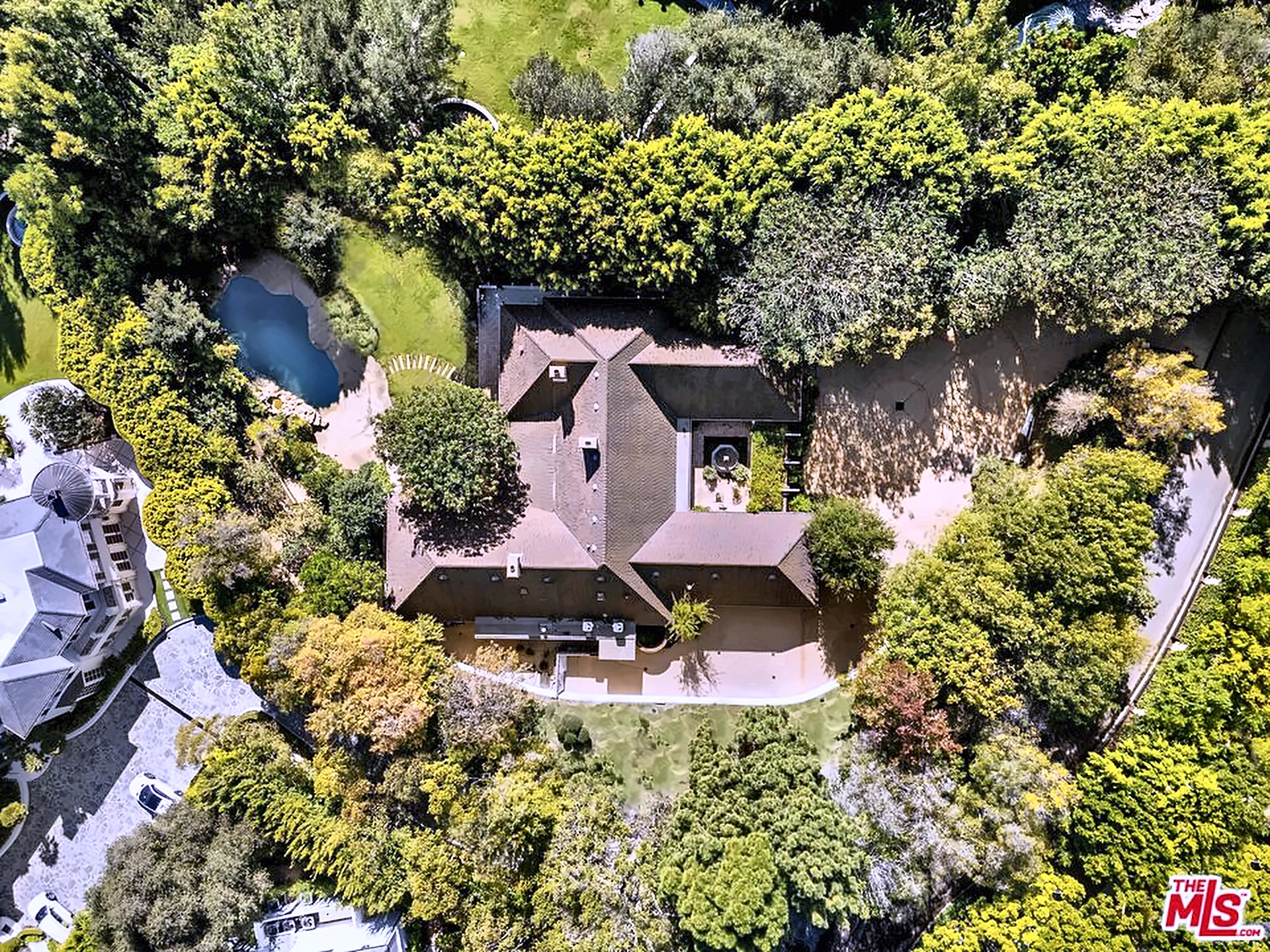
612 Nimes Rd, Los Angeles, CA 90077
Second homes, rental homes and 1031 exchanges
The home sale exclusion only applies to your main home. If you own a second home in Malibu or a pied-a-terre in the Hollywood Hills that you use yourself, the whole gain is taxable when you sell. A home you hold as a rental is also taxable, but it may qualify for a 1031 exchange into another investment property, which can defer the gain. A home used mainly for personal purposes, whether it is your main home or a vacation home, does not qualify for a 1031 exchange. The exchange rules are strict and time-limited, so talk to your CPA about setting one up before the sale closes, not after.
Inherited homes, trusts and the stepped-up basis
When you inherit a home, your basis is generally its fair market value on the date of death, not what the original owner paid. For a family that has held a home in Beverly Hills since the 1970s, that step up can erase decades of gain. California is a community property state, and when one spouse dies, community property generally gets a new basis on the full value of the home, including the surviving spouse's half, if the other conditions are met.
Proposition 19 changed the property tax side for heirs. A child can keep a parent's property tax base only on a family home that becomes the child's main home, and only up to a value limit, which is the current taxable value plus $1,044,586 for transfers through February 15, 2027. That is one reason many inherited homes in Los Angeles end up being sold.
Many luxury homes are also held in a trust, an LLC or a family entity. Before listing, confirm who has to approve the sale, and make sure the trustee, the CPA and the estate attorney agree on the plan, so a buyer is not left waiting while the family decides.

14901 Ramos Pl, Pacific Palisades, CA 90272
Owners 55 and older: Proposition 19 and your next home
Proposition 19 also helps owners who are 55 or older, or severely disabled, when they sell and buy again. You can transfer the property tax base of your main home to a replacement main home anywhere in California, bought or built within two years of the sale, and you can do it up to three times. If the replacement costs more than the home you sold, the difference is added to the transferred value. Capital gains tax is still owed on the sale itself, so the property tax savings and the income tax bill belong on the same sheet when you decide where to go next.
California withholding at closing
California also collects tax at closing. Unless an exemption applies, escrow withholds 3 1/3% of the sales price and sends it to the Franchise Tax Board, or a smaller amount if you elect the alternative calculation based on your actual gain. On an $11 million sale of a second home, the standard amount on the form is $366,300 held back at closing. Sellers who qualify under the main home rules can certify an exemption on Form 593, which has to reach escrow before closing. The exemption only covers withholding, and any gain above your exclusion is still reported on your return.

614 N Alpine Dr, Beverly Hills, CA 90210
Price for the net, not just the number
Taxes are not a reason to underprice a great home, but they are a reason to plan the price. The City of Los Angeles adds Measure ULA on sales above its threshold, and homes inside the City of Beverly Hills do not pay it. I will be direct: ULA is a real deal killer these days, and I break down every cost of selling a luxury home in Los Angeles, including Measure ULA, in a separate guide. On the pricing side, starting more than 10% above the market is the costliest mistake I see in Beverly Hills, because the first weeks of attention go to waste. You can read how I price a Beverly Hills estate, with three to five years of sales and land value behind every number.
You can see how I present homes for sale in a Mandeville Canyon home I have for sale on Westridge Road and a Beverly Hills Post Office home I have for sale on Schuyler Road. I hold a California real estate salesperson license, DRE 02010832, and my responsible broker is JN Properties, Inc., DRE 02140424. I am not a CPA or a tax attorney, and this guide is general information, so confirm your own numbers with your tax advisor before you decide.
Frequently asked questions
Do you pay capital gains tax when you sell your house in California? Yes, on any gain above your exclusion. If the home was your main home for two of the last five years, you can exclude up to $250,000 of gain, or $500,000 on a joint return, and the rest is taxed by both the federal government and California.
What is the capital gains tax rate on a home sale in California? California has no separate capital gains rate and taxes the gain as ordinary income, at rates up to 12.3% plus 1% on taxable income over $1 million. Federal long-term rates are 0%, 15% or 20%, and some sellers also owe the 3.8% net investment income tax.
Does California withhold tax when I sell my home? Unless an exemption applies, escrow withholds 3 1/3% of the sales price, or an amount based on your gain if you choose the alternative calculation. Sellers who qualify under the main home rules can certify an exemption on Form 593 before closing.
Can I avoid capital gains tax by renting my home before I sell it? Renting does not avoid the tax, but if you lived in the home for two of the five years before the sale, you can rent it after you move out and still use the exclusion. Depreciation from the rental years is taxed, at a federal rate of up to 25%.
Thinking about selling?
Whether your home is in Beverly Hills, Bel Air, Brentwood or elsewhere in Los Angeles, I'd be glad to walk it with you and show you what you would keep at several different prices, with your CPA in the conversation from the start. Ask me for a net proceeds estimate built around your home and your timing.
Jordan Pollack, Founder / Estate Agent, LA Luxuries Estate Agency, DRE 02010832