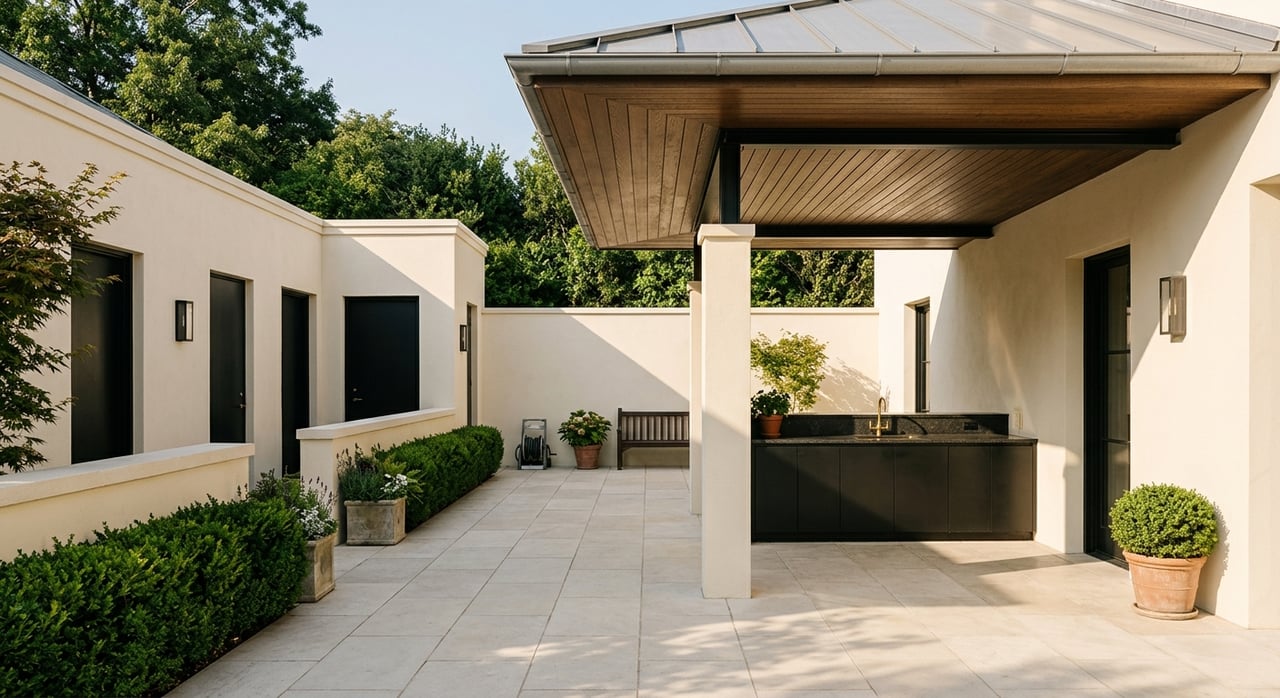
Owning a compound in Hidden Hills sounds simple on paper: buy a large estate, settle in, and enjoy the privacy. In reality, it takes far more than closing on a beautiful property. If you are considering Hidden Hills, you need to understand how governance, access, maintenance, staffing, and wildfire readiness shape day-to-day ownership. Let’s dive in.
Compound Ownership Starts With Two Layers
In Hidden Hills, owning an estate means working within both city oversight and community association oversight. The City of Hidden Hills handles public safety, Building & Safety, and planning, while the Hidden Hills Community Association manages gate access, infrastructure inside the gates, architectural standards, assessments, street maintenance, perimeter cameras, and equestrian services.
That split matters because major decisions often involve both sides. If you are planning a meaningful renovation, expansion, or exterior improvement, you are not simply dealing with one approval process. You are stepping into a layered system where timing, documentation, and compliance all affect what happens next.
Hidden Hills Is Designed To Stay Rural
A Hidden Hills compound is not meant to function like a typical luxury estate in a modern gated subdivision. The community is intentionally preserved as a low-density, country-style, equestrian setting with broad setbacks, wide side yards, no sidewalks, and no streetlights.
That design choice shapes what ownership feels like. It affects how land is used, how homes sit on their parcels, how roads function, and how the neighborhood presents itself over time. If you are drawn to Hidden Hills, part of the appeal is this protected physical character.
Lot Size Affects What You Can Build
Most residential land in Hidden Hills is subject to CC&Rs that govern land use and architectural review. The city housing element states that most parcels are at least one acre, and the smallest allowable lot size in the R-1 zone is 20,000 square feet.
For compound buyers, this means the scale of the property is only one piece of the equation. You also need to understand setbacks, site contours, lot configuration, and how the existing improvements relate to current standards. A large parcel does not automatically mean unlimited flexibility.
Architectural Review Is Central
Almost any exterior change requires Architectural Committee approval. That includes work on a dwelling, garage, stable, pool, tennis court, fence, service yard, mailbox, name sign, accessory building, or other structure.
Plans must show dimensions, materials, colors, setbacks, and site contours. The committee advises submitting plans about ten days before a meeting, and the city permit process typically requires HOA approval documents. In practice, city permits are not issued unless plans show stamped architectural approval.
Due Diligence Needs To Go Deeper
When you buy in Hidden Hills, you should expect a more detailed review process than you might in other luxury markets. Buyers are told to review governing documents, board minutes, and property file authorization before purchasing.
That guidance is important because the property itself is only part of what you are acquiring. You are also stepping into a rule structure that affects access, alterations, daily operations, and long-term upkeep. A compound purchase here calls for careful review well before closing.
Privacy Is Built Into The Community
One reason Hidden Hills remains so attractive to high-profile buyers is that privacy is woven into how the community functions. Real estate access is tightly controlled, licensed agents may enter for showings, but open houses and promotional real estate items are not allowed.
That means the showing process is inherently more discreet. Privacy is not something an owner has to create after purchase. It is already reinforced through gate operations, access rules, and community standards.
Guest Access Is Structured
Hidden Hills uses a Proptia-powered access-control system. Guest access devices can be issued only to up to three qualified guests on a resident’s permanent admit list, and those guests must meet license, insurance, and registration requirements.
These devices can only be deactivated during office hours. For owners who host family, staff, assistants, or recurring visitors, this matters. A compound lifestyle here works best when guest logistics are planned, not improvised.
Staffing And Vendors Need Scheduling
One of the biggest surprises for new owners is how operational estate upkeep can become. HHCA’s service rules specifically address domestic help, party planners, caterers, florists, veterinarians, stall cleaners, farriers, trainers, rental companies, pool service, window washers, water delivery, mobile detailers, and mobile pet grooming.
Most of these services are allowed only during defined weekday and Saturday windows. Many are not allowed on Sundays and holidays. That means routine household support, not just major construction, must fit into a controlled access calendar.
Routine Upkeep Can Be Treated Like Construction
For gate-entry purposes, the association treats gardening, pool service, and other interior and exterior workers as construction-related activity. That is a critical detail for compound owners because regular estate maintenance can fall under the same scheduling framework as more formal project work.
If you are used to flexible service arrival times, Hidden Hills may require a different mindset. You need systems for vendor lists, scheduling, and access coordination to keep the property running smoothly.
Construction Requires Discipline
Approved construction work is generally limited to weekdays, with Saturdays more constrained. Construction is not permitted on Sundays or holidays, except for certain emergency repairs when the resident notifies the gate guard.
Residents must also provide contractor and subcontractor lists to the gate. In 2025, the city adopted updated construction and demolition site standards that require screened waste containers, daily cleanup of roads, parkways, and trails, dust-control plans, screened portable toilets, and asbestos compliance for pre-1992 demolitions.
Red Flag Days Add Another Layer
The city’s 2025 standards also prohibit spark-producing outdoor work on Red Flag days. For compound owners planning renovations, landscape upgrades, or long-term builds, that adds another practical scheduling issue.
Timelines in Hidden Hills are shaped by more than contractor availability. Weather, fire conditions, community rules, and layered approvals can all affect project flow.
Shared Amenities Are Not Private Event Venues
Hidden Hills includes extensive community infrastructure across 658 home sites, including 6 miles of roads, 25 miles of bridle trails, 3 riding arenas, 3 gatehouses, a recreation center, a competition-size pool, and a 99-seat theater.
These facilities are for resident use and enjoyment, but they may not be reserved exclusively for private functions. Indoor facilities cannot be reserved for private functions at all, and outdoor gatherings are allowed only if they do not monopolize the space and may require insurance.
For compound owners, that distinction is useful to understand early. Community amenities are a meaningful benefit, but they are not an extension of your private estate for exclusive entertaining.
Wildfire Readiness Is Part Of Ownership
In Hidden Hills, resilience is not optional. The city states that parts of the community fall within Moderate, High, and Very High Fire Hazard Severity Zones, and annual brush-clearance inspections begin May 1 on roughly 3,000 Hidden Hills and Calabasas properties.
The city also uses grazing goats to help clear brush along its northern and eastern borders. That detail says a lot about local conditions. Fire preparedness here is part of normal property operations, not a once-a-year checklist.
Defensible Space Matters
The city advises owners to keep long driveways clear of overhanging vegetation, train household staff on wildfire response and evacuation, and inventory high-value items for insurance and recovery planning. Residents can also receive free Home Ignition Zone assessments through the Los Angeles Emergency Preparedness Foundation.
If you own a large estate with multiple structures, gates, and long approach roads, this guidance becomes especially important. A compound needs a clear response plan that every member of the household understands.
Red Flag Rules Affect Daily Life
Hidden Hills has a Red Flag ordinance effective April 9, 2025 that bans outdoor grills, fire pits, outdoor smoking, and gasoline- or propane-powered maintenance equipment during Red Flag Warnings. Standby generators and certain pumps are still allowed.
This means fire weather can directly change how you use and maintain the property on a given day. Owners and staff need to know these rules in real time, especially on larger estates where outdoor operations are constant.
Power Outages Need Planning
The city says the entire community is served by a single Southern California Edison circuit called Horizon. As a result, a Public Safety Power Shutoff can affect the whole city.
Hidden Hills also uses two evacuation planning zones, HID-C501 and HID-C502, for alerts and emergency planning. If you are considering a compound purchase, backup power, refrigeration, communications, and household response planning should all be part of your ownership strategy.
Even Landscaping Has Rules
Estate maintenance in Hidden Hills includes local operating limits that many buyers do not expect. Gas leaf blowers are banned citywide, and the city expanded the ban to leaf blowers on parkways, roads, streets, and trails. Electric or battery units are allowed only on private property.
That may sound small, but on a large property, landscaping rules affect equipment choices, crew practices, and how quickly maintenance can be performed. Over time, details like this shape the true rhythm of compound ownership.
What Owning A Hidden Hills Compound Really Means
At this level, buying the property is only the beginning. To own well in Hidden Hills, you need to understand layered approvals, controlled vendor access, operational discipline, privacy procedures, and wildfire resilience.
For the right buyer, that structure is part of the value. It helps preserve the community’s low-density character, privacy, and distinctive setting. But it also means a Hidden Hills compound performs best when ownership is approached with preparation, coordination, and a clear long-term plan.
If you are evaluating Hidden Hills, it helps to work with a team that understands not just the asset, but the operating reality behind it. For discreet guidance on luxury acquisitions, off-market opportunities, and estate-focused planning, connect with LA Luxuries.
FAQs
What makes owning a compound in Hidden Hills different from owning a luxury estate elsewhere?
- Hidden Hills combines city oversight with community association oversight, so ownership often involves layered approvals, gate-access rules, architectural review, and detailed operating standards.
What approvals do you need for exterior changes to a Hidden Hills property?
- Most exterior changes require Architectural Committee approval, and major projects usually also require city review and permit submission with HOA approval documents.
Can you hold open houses when selling a Hidden Hills compound?
- No. The community does not allow open houses or promotional real estate signage, and licensed agents enter for controlled showings.
How are staff and service vendors handled at Hidden Hills estates?
- Many workers and vendors must follow defined weekday and Saturday access windows, and some services are not allowed on Sundays or holidays.
How does wildfire planning affect Hidden Hills compound ownership?
- Owners need to account for brush clearance, defensible space, Red Flag restrictions, possible Public Safety Power Shutoffs, and evacuation planning tied to local alert zones.